Session One
Paul's Greeting to the Corinthians
1 Corinthians 1:1–9 · Acts 18:1–18
Read it here, mark it here, answer it here, one page at a time. Everything you write stays on this phone or laptop, and the page reopens where you left off. Bring your own Bible too. Verse numbers line up.
A
Establish the context
Paul reached Corinth on his second missionary journey and stayed about eighteen months with a young church made up mostly of Gentile converts. A few years later, from Ephesus, he heard reports of quarrels and immorality back in Corinth, and the Corinthians themselves wrote asking for direction. He could not travel, so he wrote. This session looks at how he opens that letter.
The Ascension workbook dates the letter to spring AD 52. Most commentaries put it between 52 and 55. Either way it is written from Ephesus, on the third journey, to a church Paul himself planted.
Before you begin: if you have not read the whole letter yet, do it once, fast, in one sitting. Sixteen chapters take about forty minutes aloud. In the room we do it as a relay, one chapter each, one sentence on what Paul is worked up about.
B
Read the story
Read carefully, and as you read ask: who, what, when, where, how, why.
As always, pray before you read.
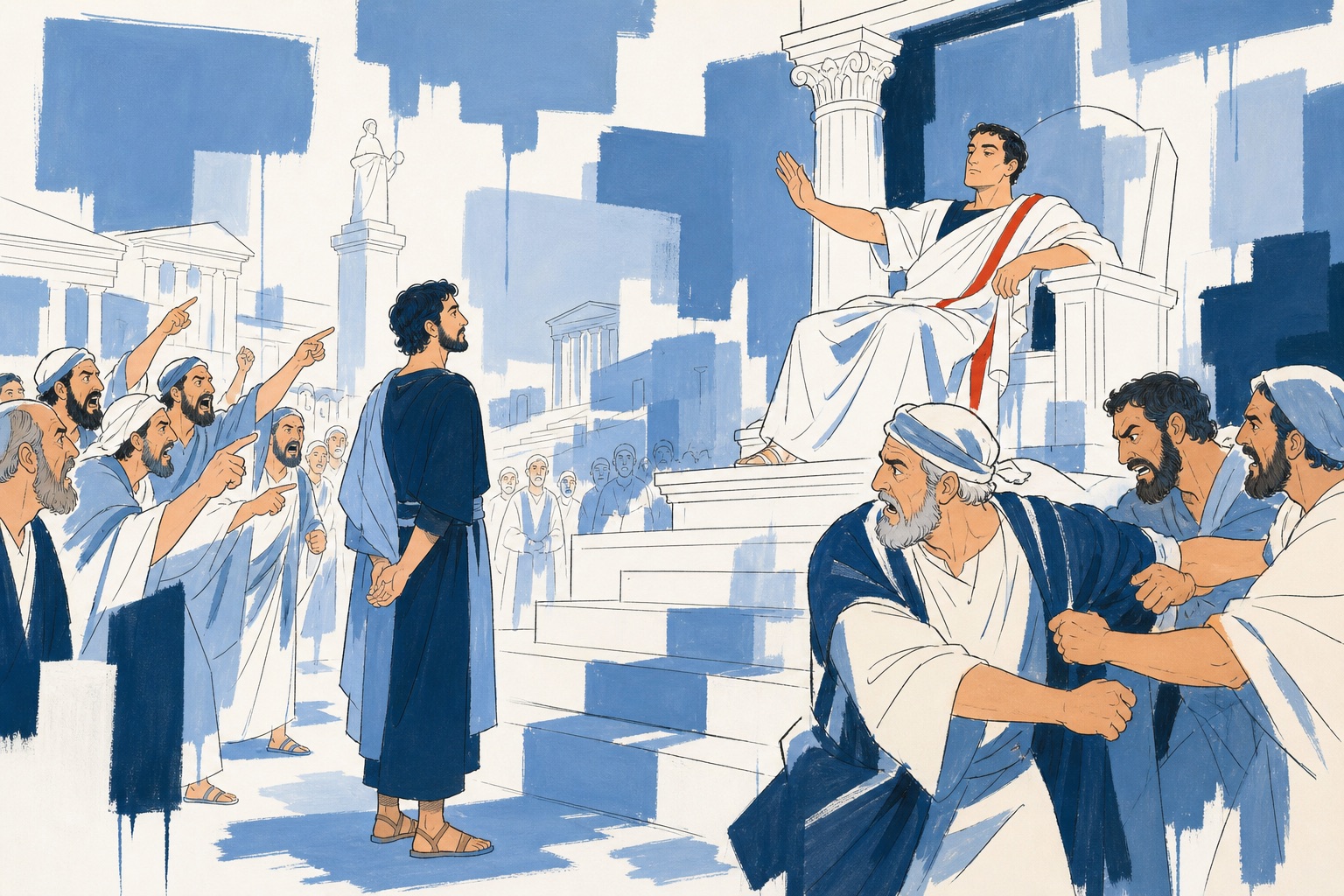
NRSV-CE. Assign the five parts, read it once as a scene, then read it again straight.
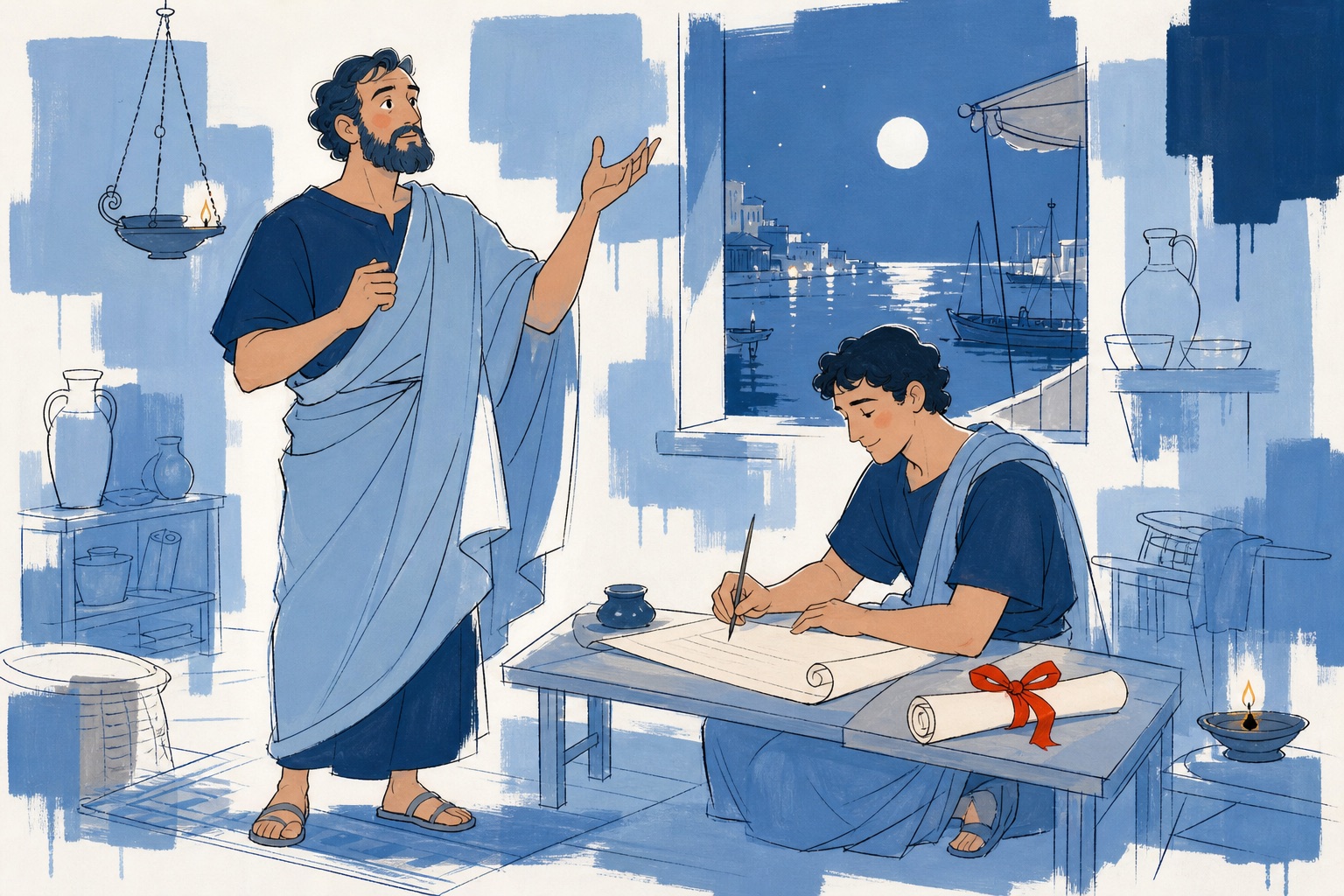
NRSV-CE. Verse 24 is included below the greeting because question 4 sends you there.
Who, what, when, where, how, why
C
Take a deeper look
These questions draw you into the heart of the story. If something does not make sense, write that down too. It is the best thing to bring to the discussion.
Paul's time in Corinth (Acts 18:1–8)
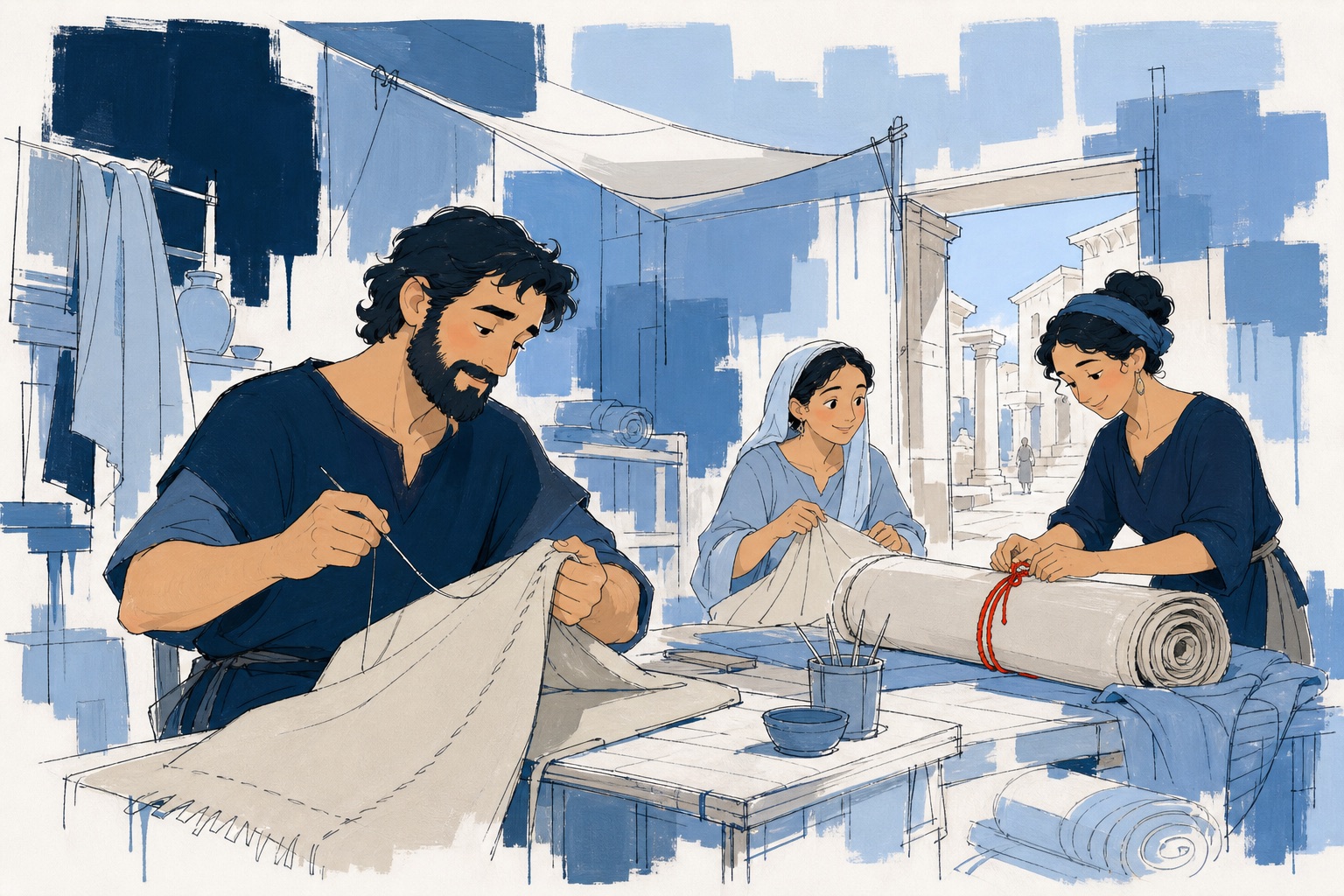
When Paul arrives in Corinth, who are the first people he meets, and what is their trade? How long does Paul stay in Corinth?
Aquila and Priscilla become Paul's companions for the sake of the gospel. What else does Scripture tell us about them? Split the three passages between you and report back.
1 Corinthians 16:19 reader one
Romans 16:3–5 reader two
Acts 18:26 reader three
“He” is Apollos, an eloquent preacher from Alexandria who knew only the baptism of John.
How are Priscilla and Aquila an example of the effect faith should have on a life?
Acts 2:42 the life of the first Christians
Read Jeremiah's call next to Paul's night in Corinth. Two readers, alternating.
What kind of response do both Jeremiah and Paul get to their message?
How do God's words to Paul echo his words to Jeremiah? Mark the phrases that match.
Paul's greeting (1 Corinthians 1:1–9)
In Corinth, Paul went first to the Jewish community and argued that Jesus was the Messiah. Most rejected him, so he turned to the Gentiles, and many were baptized. That is the church he now writes to.
Called to be saints
“Saints” in Paul's greeting is the Greek hagioi, “holy ones.” In the Old Testament, what was made holy was set apart for God's service: the Temple vessels, the Levites. But long before the Temple, God told Moses to say to the whole people:
Everyone in the covenant is called to be set apart for God. How much more the baptized, who receive the Holy Spirit and with it the power to live that call.
Paul writes to another church about the same calling. How do the three callings in the Corinthian greeting show up in these lines?
Ephesians 4:1–3
Paul's call to be an apostle
Christians' call to be saints
Christians' call into fellowship
A Greek letter of the day opened with chaire, “good health,” “be well.” Paul takes that form and changes one word. What does he write in 1:3 instead, and what is he doing by changing it?
Write your own greeting
Paul's opening has four moves: who I am, who you are, the blessing, and what I thank God for in you. Write the first lines of a letter to your own parish or group in the same shape. Two or three minutes. A few get read aloud.
With what does Paul say God has enriched the Corinthian church?
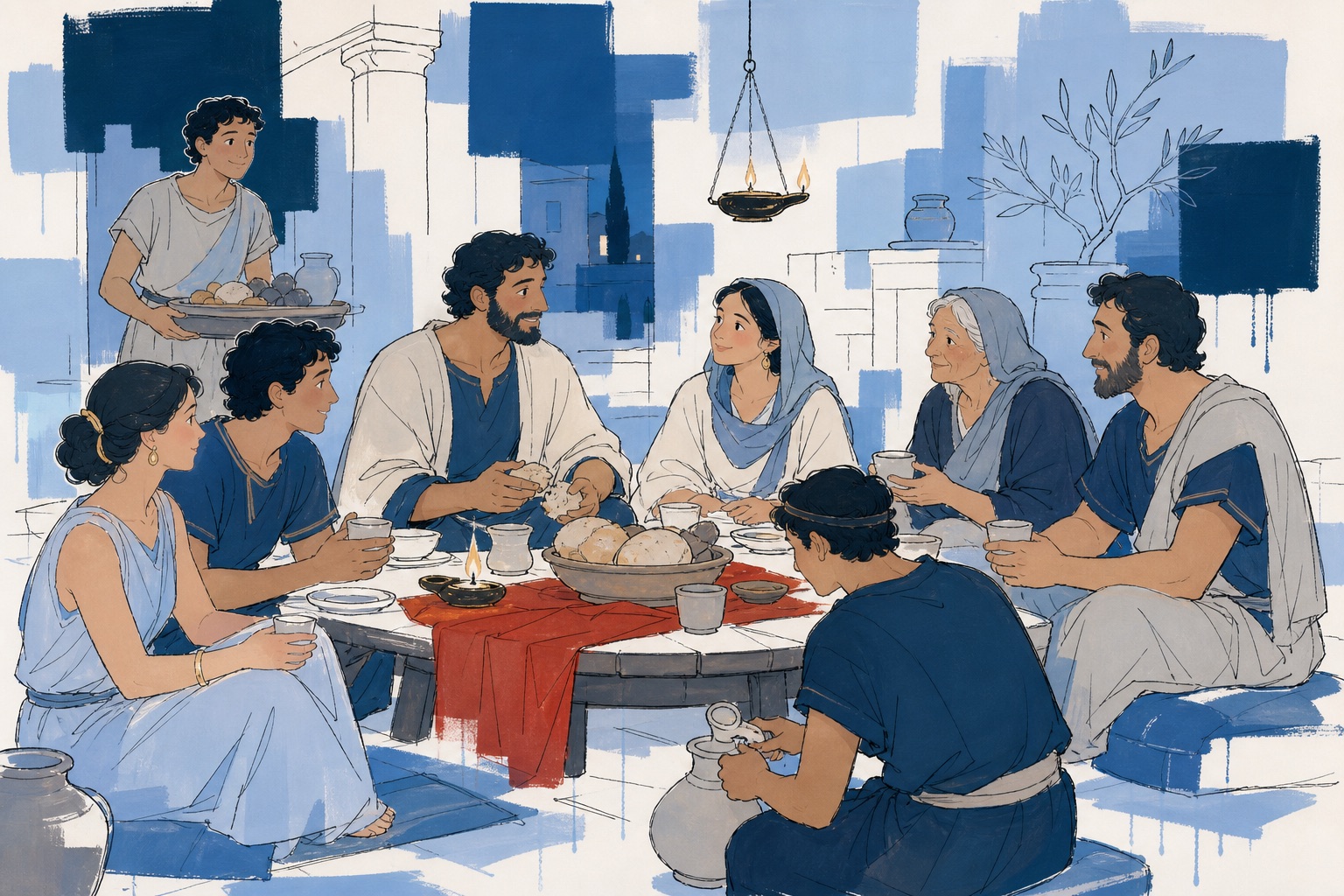
What are the Corinthians called into, according to verse 9?
Who else is among those called to this fellowship (see 1:2)? What does that teach about the nature of the Church?
How many times is Jesus Christ named in 1:1–9? Why do you think Paul repeats the name so heavily in the opening of a letter to a divided church?
D
Application
One theme from the session, brought home. We do it as a slow reading before the written prayer.

Someone reads verses 4 to 9 aloud, slowly. Everyone else listens without following the text. Then a second reading, this time following along.
Third reading. Which word or phrase stayed with you? Not the most important one, the one that stayed. Write it down, then say it aloud around the circle, no explanation.
Paul calls the Corinthians “called to be saints.” Holiness is not for a few. The Second Vatican Council said the same: everyone is called to holiness, and reaching it takes the strength we have been given, used with all our being, following Christ and serving our neighbour (Lumen Gentium 39–40).
Holiness does not happen by accident. Where in your week is effort going toward it, and where is it not? What is one concrete change in response to the call?
Dear Lord…
Session 1
Talk notes
The outline behind the video talk, for taking notes against. Six Greek words carry most of the weight.
- I. Corinth in the first century
- Height of the Roman Empire, the Pax Romana
- Caesar Augustus claimed divinity, “son of God,” and built temples to himself across the empire
- A Greek city inside the Roman Empire: Greek for daily life, arts and thought; Latin for government
- A major city: arts and sport (the Isthmian games), commerce, and a reputation for loose morals, the Las Vegas of the empire
- Paul arrives on the second journey, AD 49: a strategic hub for spreading the gospel
- Meets Priscilla and Aquila, refugees from Claudius' expulsion of Jews from Rome over a dispute about Chrestus
- Supports himself as a tentmaker
- II. Introduction to First Corinthians
- Opens with a greeting (1:1) and names Sosthenes, a Corinthian convert. Compare Acts 18:17
- “To the church of God which is at Corinth” (1:2)
- Calls Jesus Kurios, subverting the emperor's claim. A hint of the conflict to come
- “Grace to you and peace” (1:3) replaces the Roman wish for health with charis and eirene
- Gives thanks, eucharistia, for God's grace to them (1:4)
- Waiting for the return of Christ and judgment (1:8)
- Reminds them they are called to holiness
- “Called into the fellowship of his Son” (1:9): koinonia with Christ and his Church
- Christian life must be communal life
- Fellowship strengthens us against the surrounding culture